
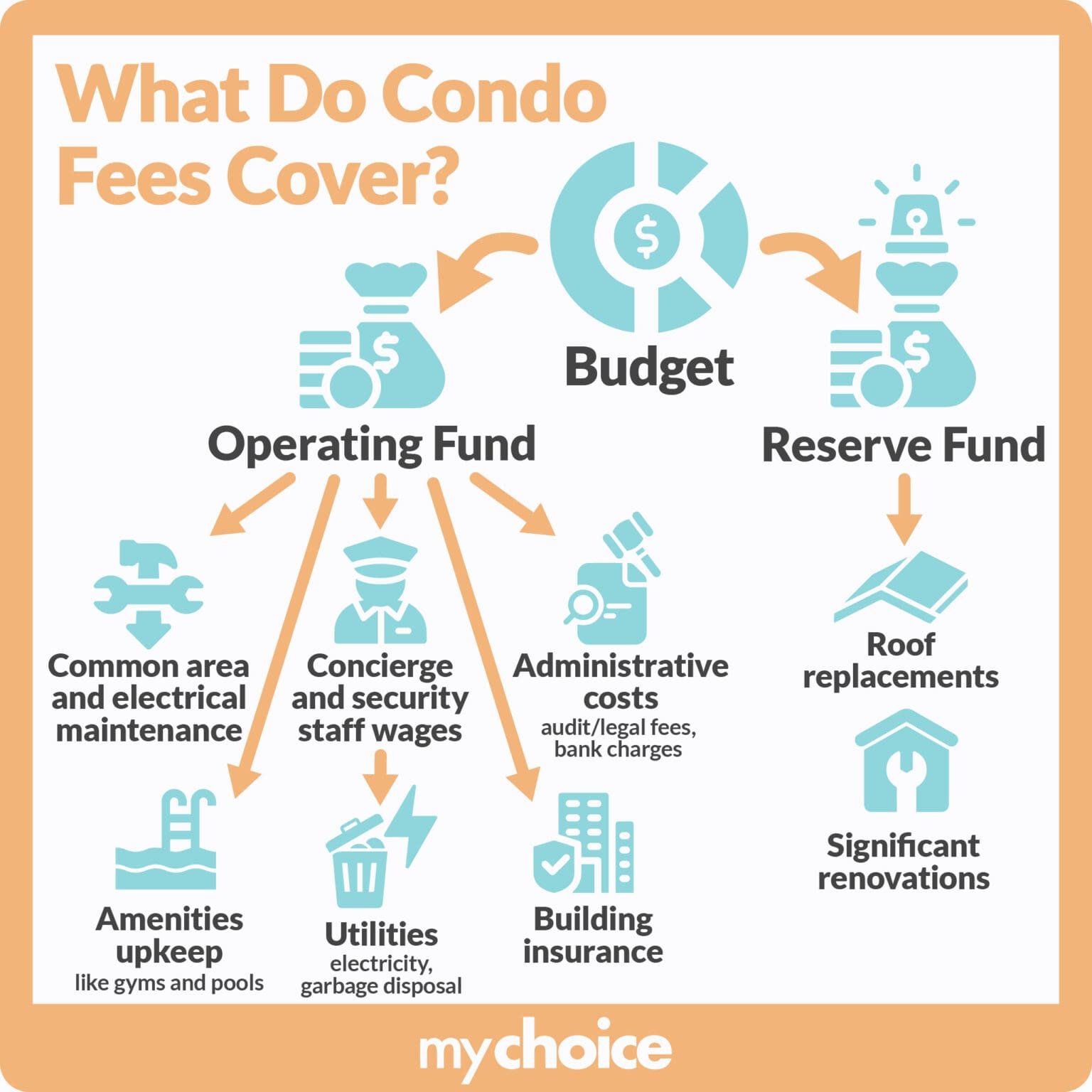
Image courtesy of MyChoice.ca
When touring condos or townhouses, buyers often focus on purchase price, location, and finishes, but maintenance fees can make or break your financial picture. These monthly payments cover shared building expenses, and understanding them is crucial for condo ownership. Here’s everything you need to know.
What Are Maintenance Fees?
Maintenance fees pay for:
Building insurance (fire, liability, common areas)
Utilities (water, heat, sometimes hydro for common areas)
Reserve fund contributions (for future major repairs like roofs, elevators)
Common area maintenance (hallways, gym, pool, landscaping)
Management fees (professional property management)
Administrative costs (legal, accounting)
Average fees in Ontario (2026):
Low-rise condos/townhouses: $0.40, $0.70/sqft
High-rise condos: $0.70, $1.20/sqft
Example: 800sqft condo = $320, $960/month
Why People Hate Paying Fees (And Why They’re Essential)
The complaints I hear most:
“It’s like rent on top of my mortgage!”
“Why pay for amenities I never use?”
“Fees keep going up!”
The reality: Without fees, you’d pay these costs yourself, roof repairs ($50K+), insurance ($5K/year), snow removal ($2K/winter). Fees spread the risk and protect your investment.
Why fees matter:
Property value protection: Well-maintained buildings retain value better
Legal obligation: Condo corporations can lien your unit for unpaid fees
Future-proofing: Healthy reserve funds avoid special assessments
Who Oversees the Fees?
Condo Corporation Board (elected owners) sets the budget, but:
Professional property managers handle day-to-day operations
Annual audits ensure transparency
Owner meetings (AGM) approve budgets and major expenses
Reserve fund study (every 3 years) forecasts future costs
Red flags to watch:
Fees under $0.50/sqft (likely underfunded reserves)
Frequent special assessments
Board conflicts or poor communication
Example: Sarah’s $450 Monthly Fee Decision
Sarah found two identical 750sqft condos for $550K:
Condo A: $350/month fees (gym, pool, concierge)
Condo B: $520/month fees (same amenities + 20% higher reserve fund)
Condo A looked cheaper, but its status certificate showed underfunded reserves and a pending $15K/unit roof assessment. Condo B had healthy reserves and no immediate issues.
Sarah chose B. Two years later, Condo A owners faced $18K assessments while her fees rose only 3%.
How to Make the Most of Your Fees
Before buying:
Review status certificate (mandatory seller disclosure)
Check reserve fund health (aim for 70%+ funded)
Attend board meeting or talk to residents
Calculate total ownership cost (mortgage + fees + taxes)
After buying:
Get involved, run for the board or join committees
Use amenities, that’s what you’re paying for!
Vote smart at AGMs, challenge wasteful spending
Budget for 3-5% annual increases
Pro tip: Treat fees like strata insurance. You hope you never need it, but when the elevator breaks, you’re glad it’s covered.
Bottom Line
Maintenance fees aren’t “extra rent”, they’re investment protection. Shop for condos where fees reflect value, not avoidance. A $100/month fee difference today could save you $20K+ in future assessments.
Buying a condo or townhouse? I can help you decode status certificates, analyze fees, and find properties where your total ownership costs make sense. Contact Mr. Mortgage (Kechanth Kannan) today.
Questions to ask first
If you are looking at a condo or townhouse, here are a few questions I would work through with a client.
What does the maintenance fee actually cover, and what would I still pay on my own?
How would the fee, plus property tax and the mortgage payment, fit my monthly budget?
Is the reserve fund in reasonable shape, or are special assessments a near-term risk I should understand?
If the fee rose, would I still be comfortable with the property, or would I be stretched too thin?
You might also like: Why Property Taxes Vary So Much From City to City, Understanding Interim Occupancy: What It Means for Your Mortgage, and First-Time Home Buyer Programs vs. Minimum Down Payment Rules: Clearing Up the Confusion.
Contact me today.
Kechanth Kannan | Mr. Mortgage
Phone: +1 (647) 554-2718
Instagram: @_mrmortgage
Book a free consultation
