
Readvanceable Mortgages: A Flexible Way to Access Home Equity
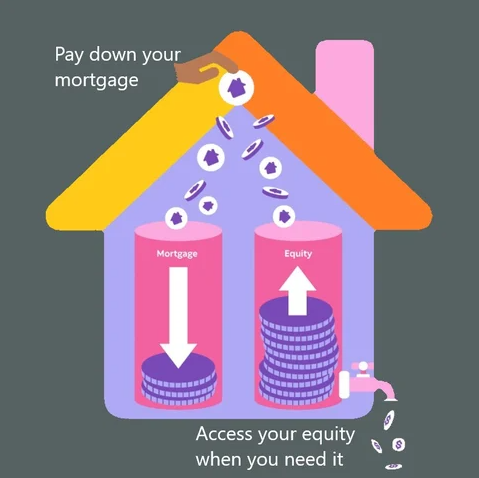
Image courtesy of Richards Mortgage Group
A readvanceable mortgage combines a traditional mortgage with a home equity line of credit, often called a HELOC. As you make payments and reduce your mortgage principal, an equivalent amount of borrowing room can become available in the line of credit — giving you access to equity without applying for a brand-new loan each time.manulifebank+1
It can be a valuable planning tool, but it is not “free money.” You are still borrowing against your home, and any amount you draw must be repaid with interest.
How it works
Every regular mortgage payment includes both interest and principal. Interest is the cost of borrowing; principal is the amount that actually reduces what you owe.
With a readvanceable structure, the principal you pay down can increase the available limit on the attached HELOC, subject to the lender’s product rules and lending limits. For example, if a $2,800 mortgage payment includes $900 toward principal, your available HELOC room may increase by about $900 after that payment is processed.manulifebank+1
When it can be useful
A readvanceable mortgage can give a homeowner flexibility for a planned renovation, an emergency reserve, consolidating higher-interest debt, or certain investment strategies. It may be especially useful for someone who has equity but does not want to complete a full refinance every time they need to access funds.
The key is purpose. Borrowing against home equity for a renovation that protects or improves the home may be very different from repeatedly using a HELOC to fund everyday spending. Credit accessed through the HELOC is generally revolving and often variable-rate, so the payment and interest cost can change.manulifebank
An applicable example
Imagine you bought a home with a $650,000 mortgage. Over time, your regular payments reduce the balance by $25,000 in principal.
With a conventional mortgage, that $25,000 stays as equity in the property unless you refinance or apply separately for a line of credit. With a readvanceable mortgage, up to that principal reduction may become available through the HELOC component, within the lender’s approved limit.
Now imagine your roof needs a $15,000 replacement. Rather than using a high-interest credit card or a personal loan, you could draw $15,000 from the HELOC. But you would want a repayment plan: at 7% interest, carrying that $15,000 balance without paying down principal would cost roughly $88 per month in interest alone. The flexibility is helpful only if it comes with discipline.
My perspective
As a mortgage professional, I see readvanceable mortgages as a strong option for organized homeowners with a clear plan. They can create flexibility and reduce the need to refinance repeatedly — but they can also make it too easy to turn home equity into long-term debt.
Before choosing one, ask yourself: What would I use the HELOC for? How would I repay it? Could I still afford it if rates rise? And do I value flexibility enough to accept the product’s potential rate and borrowing risks?
What to review
The HELOC rate, whether it is variable, and how payment requirements work.
The maximum combined mortgage and HELOC limit your lender will approve.
Whether the mortgage is registered as a collateral charge and what that could mean if you switch lenders later.
Prepayment privileges, portability, fees, and early-break penalty terms.
A written plan for any funds you expect to borrow.
Thinking about refinancing, renovating, consolidating debt, or making your home equity work more strategically? Reach out to Mr. Mortgage. Let’s review whether a readvanceable mortgage fits your goals, budget, and long-term plan.
Kechanth Kannan | Mr. Mortgage
Phone: +1 (647) 554-2718
Instagram: @_mrmortgage
